
From the 1964 parks to the present visitor area
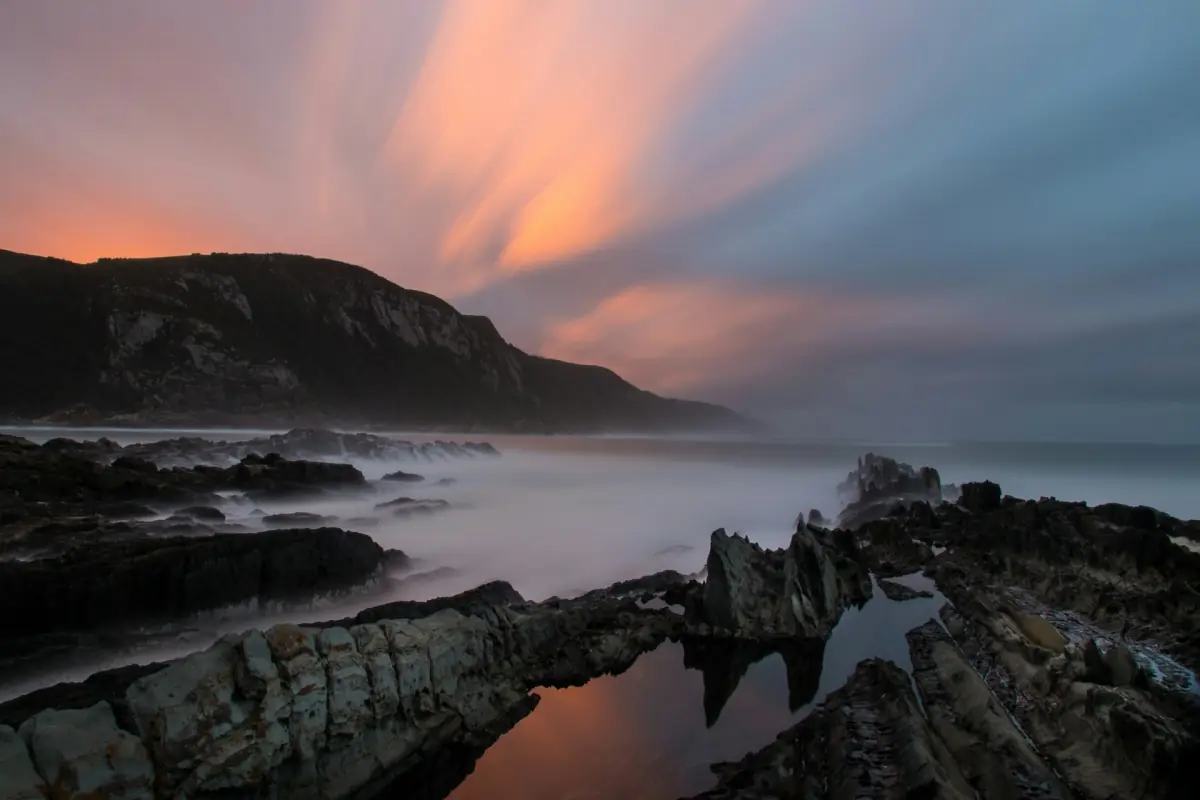
Tsitsikamma National Park history begins with the proclamation of the Coastal and Forest National Parks in December 1964. Coastal forest and marine habitats were central to that protection. The landscape encountered today connects the sea, rocky shore and forest rather than a single type of attraction.
The familiar park name remains useful for travel, but today’s Tsitsikamma section is part of Garden Route National Park. Storms River Mouth and Nature’s Valley are separate visitor bases within that wider context. A historical name alone does not establish one present-day gate, fee or accommodation area.
For a modern park visit, use the actual itinerary and location. The historical connection between different landscapes is not a transport service between them.
Visit the forest and historic bridge
The guided itinerary lists the historic bridge and forest trails.
Hand-picked tours, booked through GetYourGuide. Prices are indicative starting prices in US dollars (as of October 2026). Tap a tour for live availability and the current price in your currency.
The main stages in order
| Date | Development |
|---|---|
| December 1964 | Coastal and Forest National Parks proclaimed |
| 1987 | De Vasselot added |
| 1989 | Forest National Park deproclaimed; the coastal park subsequently known as Tsitsikamma National Park |
| 6 March 2009 | Government announcement documenting Garden Route National Park and its existing protected areas |
These dates describe different changes. The 2009 Garden Route announcement does not replace the 1964 beginnings of protection, while the earlier park name does not describe every administrative arrangement today. Keep the relevant event attached to its date.
Coast, forest and human use
The park's official history describes forestry and fishing as part of the area's story. It also describes caves, shell middens and rock art. These strands belong alongside the protected landscapes rather than being reduced to a list of adventure activities.
A mention of an archaeological place is not permission to find or enter it independently. Follow the current visitor routes and instructions. Do not remove plants, animals or cultural material, and do not disturb wildlife. A historical interest in the coast is compatible with keeping the visit on the permitted paths.
For a walk, choose the named current trail rather than inferring a route from a history description. For a guided visit, ask which sites or landscapes the actual itinerary covers. A general guide service does not automatically include a specialist archaeological visit.
Read today’s locations through that history
Storms River Mouth
The coast at the Mouth is a visitor base for the river-mouth path and other coastal routes. A stay at the camp is an accommodation booking with its own dates and category. It is not a single pass for every surrounding adventure or a reservation for the multi-day Otter Trail.
Nature’s Valley and De Vasselot
De Vasselot's addition is a separate historical stage. Today the Groot River camp provides another base, with its own arrival arrangements and conservation tariff. It is also the required checkout point after completing the Otter Trail.
Stormsrivier Village and Bloukrans
The village canopy activity and Bloukrans bridge activities are separate itinerary locations. Do not place them at the Mouth merely because a wider tour uses the Tsitsikamma name. Their activity bookings have their own starts, participation requirements and inclusions.
Use historical context without carrying old rules forward
Historical dates are useful for understanding the park's development. Current fees, access and booking requirements require the rules for your travel period. A photograph of an earlier bridge or a reference to a former park arrangement cannot establish today’s route access.
Choose your main interest, then match the current place and booking. That can be a coast walk, a forest activity, a river-base stay or a longer journey containing a park visit. Each is clearer when the history and the present practical arrangements retain their own roles.
Questions for your visit
Was Tsitsikamma first protected in 2009?
The Coastal and Forest National Parks were proclaimed in December 1964. The 2009 announcement concerns the later Garden Route National Park.
When was De Vasselot added?
De Vasselot was added in 1987. It remains a separate visitor base at Nature’s Valley.
Can I visit archaeological places freely?
A historical description does not establish access. Follow current park routes and instructions and leave cultural material undisturbed.